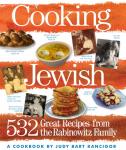
BUY COOKING JEWISH by clicking here now.



Aunt Sally's Old-Fashioned Apple Cake for Rosh Hashanah
Rosh Hashanah is coming, apples are in season, and thoughts turn to the familiar. Friends tell me this tried and true, really simple cake reminds them of the one their bubbe or tante used to make.
Aunt Sally's Apple Cake
Serves 9
Apple Sweetened Rosh Hashanah
My story in the Orange County Register celebrates apples with recipes from "The Silver Palate Cookbook: 25th Anniversary Edition" by Julee Rosso and Sheila Lukins, "A Passion for Baking" by Marcy Goldman and "The Santa Monica Farmers' Market Cookbook" by Amelia Saltsman.
You'll find recipes for Cinnamony Baked Apples, Rougemont Apple Pastry Cake, Ellen's Apple Tart, and Baked Applesauce.
From my family to yours, wishing you all a Happy New Year filled with sweet surprises.
The Orange County Register, Thursday, October 25, 2008
by Judy Bart Kancigor
Stroll through the farmers' market, and you feel fall approaching. As we say goodbye to summer's heat, those achingly sweet, soft, dribble-down-your-chin melons, peaches and plums give way to fall's bounty of apples: cool and crisp as an autumn's day. Read the whole story.
Rosh Hashanah memories
When I was growing up, my large, boisterous family would gather in my grandparents’ tiny apartment in Mom and me Belle Harbor, New York, for the festive Rosh Hashanah meal. Papa Harry, who had emigrated from Russia in 1906 as a carpenter, would extend the dining table with boards reaching practically to the walls. The arrival of the aunties with their foil-covered dishes signaled the beginning of the holiday feast, a menu that seldom varied:
For the forshpeis (appetizer) Aunt Estelle’s homemade, lovingly shaped gefilte fish served with Uncle Lou’s horseradish, hand-grated on the back porch to keep out the fumes;
 Aunt Irene
Aunt Irene’s golden chicken soup and ethereal matzo balls, followed by Mama Hinda’s roast chicken and brisket with oven-browned potatoes and Aunt Sally’s tsimmes (sweet carrot stew).
The centerpiece of the table was Mama Hinda’s grand spiral challah, round for Rosh Hashanah, the Jewish New Year, a symbol of the endless cycle of life. Only for this holiday would she add raisins, a sweet embellishment to enjoy a sweet New Year.
Sweet notes echoed from the beginning of the meal, as all assembled dipped apples in honey, to the dessert platters wedged onto Mama’s groaning sideboard: Aunt Irene’s dark, dense honey cake, Aunt Estelle’s mile-high sponge cake, Aunt Hilda’s chocolate chip
Rosh Hashanah's comin' and the livin' is easy
Orange County, CA caterer, Blueberry Hill
This week's recipe: BLUEBERRY HILL’S MANGO CHUTNEY BRISKET
I can tell Rosh Hashanah is approaching, because I’m already getting phone calls from my family and friends, my mother’s friends, even strangers!
“Can I make the brisket ahead and freeze it?” “Can I freeze the kugel?” “What should I do about my burnt honey cake?” (Yes and yes to the first two and “Um, do you have a dog?” to the third.)
Jewish cooks the world over are shopping and chopping, searing and sautéing – so many dishes, so little time.
In bygone days our foremothers, stay-at-home moms before that term ever became popular, had little distractions from the task at hand: putting a holiday feast on the table for their large extended families.
Today’s cooks squeeze the job in between work, carpools, meetings, etc. – all while trying to recreate those labor-intensive recipes their grandmothers slaved over. For what is a holiday if not the gathering of families connecting to their roots and traditions?
Now Orange County boasts its own kosher caterer, Blueberry Hill, that can provide a full dinner or even help out with a dish or two so you can enjoy your guests as you celebrate together.
(“The perception always was that kosher food is awful,” said Beverly Scheftz, who with her son Trevor owns and operates Blueberry Hill, “but it doesn’t have to be that way, and it’s definitely not that way.”
Posted in Submitted by Judy on Fri, 09/07/2012 - 7:03am.
Honey sweet, honey bitter
Up to my eyeballs with Rosh Hashanah preparations – lamb shanks roasting, honey orange sponge cake cooling upside down over a soda bottle, chicken soup simmering, apples all over my counter waiting to be sliced – I hear the doorbell. Slightly annoyed at the interruption, I open the door to find the UPS man delivering my eagerly-awaited copy of “Sweet Myrtle and Bitter Honey: The Mediterranean Flavors of Sardinia” (Rizzoli International) by restaurateur Efisio Farris with Jim Eber.
A cookbook with honey taking center stage arrives erev Rosh Hashanah. How beshert (destined) is that?
Sardinians flavor not only their desserts, but also their savory dishes with many varieties of local honey: miele millefiori (thousand flower honey), eucalyptus, chestnut, and the afodelo, acacia, and cardo flowers.
But two are truly unique in flavor – abbamele, a honey and pollen reduction they drizzle over ice cream, cheese, fresh fruit...even salads, and miele amaro or bitter honey, made from the flowers of the strawberry trees – a staple in every Sardinian kitchen – whose flavor Farris describes as “a deep yet fleeting sweetness, followed by an appealingly bitter aftertaste.” (Bitter honey as well as
Breaking the fast the Ginter way
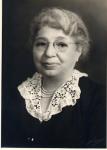 Nonni LizzieA Yom Kippur recipe story. Now, there’s an oxymoron if I ever heard one.
Yom Kippur, the holiest day in the Jewish calendar, is a day of repentance, prayer, forgiveness…and fasting. So this would be a really short story if not for the fact that all good fasts must come to an end, and indeed they do in the lovely tradition called Break-the-Fast.
Dede and Ed Ginter have been hosting a Break-the-Fast at their Fullerton home for the past 35 years. “We have mostly the same people every year,” said Dede, “and we stagger the meal, because different temples get out at different hours."
“But we do have some turnover from year to year,” Ed pointed out. “Whenever we hear of somebody with no place to go, we invite them. Sometimes they are students, or my granddaughter will have a friend who likes to eat, so we say, ‘Bring her along!’”
After a day of praying and fasting, the meal, as in most homes, is dairy. “We have lots of fruit, lox and bagels, a kugel (noodle pudding), poached salmon, a variety of sweets, and my kids’ favorite, cheese blintz soufflé,” said Dede. ”It’s an old recipe and really nice, because you can prepare it before you go to temple. Then when you get home, you bring it to room temperature, and 40 minutes before your guests arrive, you just pop it in the oven, and it puffs up beautifully.”
Dede makes two kugels to please all. “My grandkids don’t like raisins, so I make one with and one
Thanksgivvukah - a once in a lifetime celebration
My story in this month's Orange County Jewish Life magazine discusses the weird convergence of Thanksgiving and Hanukkah this year with lots of suggestions for celebration.
"Top Chef" winner at the Orange County Fair
(Recipe for MICHAEL VOLTAGGIO'S PEACH BRÛLÉE WITH GREEK YOGURT, CINNAMON CROUTONS & POMEGRANATE MOLASSES follows story)
I felt as if I had entered an alternate universe. Outside the vendors were hawking deep-fried butter and frogs' legs (no worries, dear reader, I had the chicken on a skewer) and inside Michael Voltaggio, last year's winner on Bravo TV's Top Chef, was decomposing a salad, his "vegetable landscape," with over twenty artfully arranged ingredients in a primordial forest tableau- not exactly what you might expect at the Orange County Fair!
Broccoli was blanched, dehydrated and then fried at 400°. "It pops like popcorn," he said. "I hated broccoli as a child, so I recreated it. I'm a big fan of broccoli now."
I love mushrooms in my salad, but I have to admit I've never tried puréeing them and using the purée in cake batter instead of sugar, "a savory cake," and baking the concoction in a tiny log-shaped mold, but if you're creating the forest floor on a plate, you've got to have a log, no? "Mushrooms grow where there's fire," he noted, so he scorched it with a blowtorch.
Voltaggio peeled a baby eggplant, threaded it with a cinnamon stick like a skewer and grilled it. "Cinnamon has a peppery flavor and gives you a whole new food experience. Try it on steak or fish," he recommended.
Roasted beets, grilled spring onions, dehydrated coriander flowers, fried okra battered in chickpea flour - this was no ho-hum, everyday salad!
Tips of tender baby asparagus and fresh peas went in raw. "You don't have to cook the crap out of everything to make it taste good," he advised. Strawberries macerated in rice vinegar and mirin (Japanese sweet rice wine) and melon slices got the vacuum pack treatment.
Company coming? Defrazzle!
Some hints from Chef Mary Sue Milliken
Interview with Bravo TV's Top Chef Masters finalist Mary Sue Milliken
Mary Sue Milliken, chef co-owner of Border Grill
Restaurants and Truck, talks to me about her recent experience on Bravo TV's Top
Chef Masters.
KANCIGOR: What was the biggest surprise between what you thought you
were getting yourself into when you agreed to do the show and how it
really played out?
MILLIKEN: At first I was pretty reluctant to do the show. It took me a
long time to warm up to the idea to do it at all. I was braced for the
worst. One thing I found to be really interesting and exciting is I
allowed myself to focus on nothing else except the competition every
single day, a pure concentration I probably haven’t had since my
twenties. There were no distractions, no email, no phone calls, no kids.
I just gave myself this gift and allowed myself tunnel vision. I really
learned and grew through that. Now when I get frustrated or irritated, I
just focus. Anybody could probably use a dose of that kind of focus.
KANCIGOR:Did you do anything special to prepare for the show?
MILLIKEN:I asked Susan [Feniger], my partner of 30 years, who had been
on the show in Season 2, “Do you think I should get in the kitchen and
work on the line for a few weeks?”
She said, “No, you’re not going to have any problem. You’re fast with a
knife.”
What I tried to do to prepare is think back through all the different
dishes I’ve made and loved that were a huge success, make myself a list
of those and remember them, so I could access something pretty quickly.
You don’t want to change gears midway through, but choose a dish to cook
and stay with it and cook it at as beautifully as you can while you’re
jumping through hoops.
KANCIGOR: How did it feel to watch the show? Were there any moments you
wish had not been edited out or wish had been edited out?
