
BUY COOKING JEWISH by clicking here now.


Recipes
Chocolate Latkes
Source: "Chocolate Holidays" by Alice Medrich
Yield: 2 dozen 2 1/4-inch cookies
4 large egg whites
3 cups sweetened shredded coconut
3 1/2 ounces semisweet or bittersweet chocolate, finely chopped
6 tablespoons sugar
2 teaspoons vanilla
Scant 1/4 teaspoon salt
1. Position racks in upper and lower thirds of oven. Preheat oven to 350 degrees. Line 2 cookie sheets with parchment paper or foil. Put some water in skillet and bring to low simmer.
2.Combine all ingredients in large heatproof mixing bowl, preferably stainless steel (ingredients heat up faster in stainless steel than in glass). Set bowl in skillet of barely simmering water and stir mixture, scraping bottom to prevent burning, until sticky and hot to touch.
3. Scoop rounded tablespoons of mixture about 2 inches apart on cookie sheets. Flatten each cookie slightly with fingers to resemble miniature potato pancakes.
4. Bake until cookies feel dry on surface and edges and protruding coconut shreds are dark golden brown (despite chocolate color) and interior still looks like melted chocolate, 13 to 15 minutes. Rotate sheets from front to bake and upper to lower about halfway through. Slide parchment paper onto cooling rack. Cool cookies completely before removing from parchment. The cookies are most delicious on day they are baked – the exterior is crisp and chewy and interior soft and moist. Cookies may be stored, airtight, 4 to 5 days.
Honey-Drizzled Chocolate Cheese Fritters
Source: “Chocolate Holidays" by Alice Medrich
Yield: 6 to 8 servings
15 ounces ricotta cheese
3 large eggs
1/2 cup all-purpose flour
2 tablespoons melted butter
1 1/2 teaspoons grated orange zest
1/8 teaspoon salt
1 1/2 ounces semisweet chocolate, finely chopped
For frying: Vegetable oil
3/4 cup warm honey
1. Mix ricotta and eggs with fork. Add flour and mix just until incorporated. Add butter, orange zest, salt and chocolate, and stir just until thoroughly combined. Batter may be prepared to this point, covered and refrigerated up to 2 days in advance.
2.In wide skillet, heat 1/2 inch oil over medium heat until few drops of batter sizzle vigorously when added to pan. Carefully add rounded tablespoonfuls of batter to hot oil. Do not crowd fritters; they need space to fry properly and to turn. Fry until brown on one side, then turn and fry other side until brown. Transfer fritters to warm platter with fork or tongs (see cook’s note). Repeat until all batter is fried. Serve drizzled with warm honey, or pass honey separately.
Note: Fry fritters up to 2 hours in advance of serving and serve at room temperature, or fry and serve hot or warm. Do not keep fritters in warm oven for long or they will dry and toughen. Just before serving time, or up to 2 hours before, place small ovenproof platter lined with several layers of paper towel or cloth napkin in 200-degree oven.
Chocolate Banana Blintzes
Source: "Chocolate Holidays" by Alice Medrich
Yield: 6 (3-blintz) servings
For crepes:
3 large eggs
1 cup all-purpose flour
1/8 teaspoon salt
1 3/4 cups milk
2 tablespoons melted butter
For frying: Butter or oil
For sauce:
7 ounces bittersweet or semisweet chocolate, chopped into small pieces
1/2 cup milk, plus extra if needed
2 teaspoons sugar
1/2 teaspoon vanilla extract
For assembly: 3 large ripe bananas
For frying: Butter
Optional for serving: Sour cream
Procedure:
1. Prepare crepes: Combine eggs, flour, salt, milk and melted butter in blender or food processor. Pulse just until blended. Chill 1 hour or up to 1 day.
2. Heat 6-inch frying pan over medium-high heat. Brush lightly with butter. Pour in 2 tablespoons crepe batter and tilt pan immediately to coat entire surface evenly. When crepe is uniformly translucent and surface no longer looks wet, 45 seconds to 1 minute, loosen edges with spatula and invert pan over piece of wax paper. Repeat with remaining batter, buttering pan as necessary. Use crepes immediately, or stack between sheets of wax paper, cover airtight, and refrigerate up to 2 days.
3.Prepare sauce: Mix chocolate, milk, sugar and vanilla in top of double boiler over barely simmering water. Or microwave on medium (50 percent) power, about 2 minutes. Stir frequently until smooth, adding milk as necessary. Use warm sauce immediately or set aside and use cool. Sauce keeps several days in refrigerator. Warm gently before use.
Persimmon, Pomegranate, and Pecan Salad
from ”The Santa Monica Farmers Market Cookbook” (Blenheim Press) by Amelia Saltsman
1 pomegranate
4 ribs celery, preferable inner whiter ribs with leaves
2 small or 1 large Fuyu persimmon
1/2 cup pecan or walnut pieces, toasted
1/2 pound mixed baby salad greens
About 1 tablespoon extra-virgin olive oil or nut oil
1 lemon
Kosher or sea salt and freshly ground black pepper
1/2 cup crumbled feta cheese (optional)
1. Remove pomegranate kernels: make a cut near blossom end of fruit, submerge in bowl of water, and break fruit into large pieces. Loosen kernels; drain and reserve.
2. With a vegetable peeler, peel celery, then slice paper-thin on diagonal. Place in a salad bowl with the leaves.
3. Core persimmon, cut vertically into quarters, then crosswise into thin slices. Add to bowl with nuts, greens, and as many pomegranate kernels as you like.
4. Grate zest from lemon in long, thin strands into the bowl. Drizzle on the oil, squeeze in some lemon juice, and season with salt and pepper. Toss well and sprinkle with cheese. Serves 8
Moroccan Spicy Apricot Lamb Shanks
From Cooking Jewish: 532 Great Recipes from the Rabinowitz Family (Workman) by Judy Bart Kancigor
Order on amazon
While brisket and roast chicken are standard fare for our holiday dinners, our Sephardic mishpuchah dines on dishes like this tender, spicy lamb, which was adapted from Molly O'Neill's take on a recipe by superchef Alain Ducasse.
When I interviewed Wolfgang Puck about his seders at Spago, he told me that if he had been born Jewish, he would have liked to have been born Sephardic because of the cuisine. I know what he means! I love the pungent Moroccan spice mixture and usually make extra to save for flavoring other dishes. The wine is an untraditional addition and would never be used in a Moroccan kitchen.
Interestingly, cookbook author Joyce Goldstein told me that Jews in Arab countries, despite the fact that they do not share their neighbors' prohibition against drinking wine, traditionally do not use it in cooking either. Purists may substitute additional chicken broth for the wine.
4 lamb shanks (about 1 pound each), visible fat removed
Kosher (coarse) salt to taste
2 tablespoons olive oil
2 medium-size onions, chopped
2 to 3 tablespoons coarsely chopped garlic
1 cup dry red wine
1 3/4 cups homemade chicken stock or 1 can (14 1/2 ounces) low-sodium chicken broth
Moroccan Spice Mix (recipe follows)
1 cup dried apricots
Black pepper to taste
Posted in Submitted by Judy on Sun, 09/23/2007 - 1:26pm.
Rosh Hashanah Apple Torte
from "The Foods of Israel Today" by Joan Nathan
as seen in The Orange County Register, 9-14-01
2 cups unbleached all-purpose flour
1/2 teaspoon baking powder
1/4 teaspoons salt
1 large egg
3/4 cup (1 1/2 sticks) unsalted butter or margarine, cut into small pieces
1 cup sugar, divided use
Grated zest (colored peel) of 1 lemon
6 medium (about 3 pounds) Granny Smith or other flavorful apples, peeled and cored
1/2 teaspoon ground cinnamon
Preliminaries: Fifteen minutes before baking, preheat oven to 450 degrees.
1. Put flour, baking powder, salt, egg, butter or margarine, 3/4 cup sugar and zest in food processor fitted with metal blade. Process until soft dough forms. Remove, roll in flour and wrap in plastic wrap; refrigerate 20 minutes.
2. Meanwhile, coarsely grate apples in food processor fitted with grating blade or use large holes on hand grater. Toss with remaining 1/4 cup sugar and set aside in colander to drain 30 minutes. Add cinnamon and toss.
3. Take 2/3 of dough and with floured fingertips, press it lightly into bottom and 2 inches up sides of 9-inch springform pan. Spoon apple mixture evenly into dough shell.
4. Roll out remaining dough on lightly floured surface into 9-inch circle about 1/8-inch thick. Place on top of apples, crimping edges of dough together to seal them. Make a few holes in top with tines of fork. Bake on middle rack of preheated oven 15 minutes. Reduce heat to 350 degrees and bake 30 additional minutes or until golden brown.
Yield: 8-10 servings
Jaffa Orange-Ginger Chicken With Baharat
from "The Foods of Israel Today" by Joan Nathan
as seen in The Orange County Register, 9-14-01
Salt to taste
1 tablespoon baharat, or to taste; see cook's notes
1 tablespoon ground ginger, or to taste
8 boneless, skinless chicken breasts
4 tablespoons olive oil
1/2 cup white wine
1/2 cup orange liqueur
1 cup chicken broth
4 tablespoons honey
1 1/2 cups orange juice
1 tablespoon grated fresh ginger
2 tablespoons grated orange zest
2 tablespoons finely chopped crystallized ginger
2 oranges, peeled and sectioned
Cook's notes: Joan Nathan says baharat is a spice mixture that varies from cook to cook, but often includes paprika, (ground) chili, cumin, coriander, cinnamon, black pepper, allspice, nutmeg, cardamom, cloves and salt. "If you can't find the mixture at a Middle Eastern market, choose from you favorite of these spices instead, making sure you include pepper," Nathan writes.
If you prefer thicker sauce, after chicken has cooked, remove chicken from sauce and increase heat to high; boil until reduced to 3/4 to 1 cup. Return chicken to sauce and complete step 5.
Posted in Submitted by Judy on Sun, 09/23/2007 - 7:12am.
Libyan Couscous with Chickpeas, Squash, Zucchini and Eggplant
from "The Foods of Israel Today" by Joan Nathan
as seen in The Orange County Register, 9-14-01
1 cup dried chickpeas
5 tablespoons olive oil, divided use
3 medium onions, roughly chopped
4 carrots, peeled and cut into 2-inch chunks
1 butternut, acorn or other bright orange squash (about 2 pounds), peeled and cut into 2-inch chunks
2 zucchini, cut into 1-inch rounds
1 large eggplant (about 1 pound), cut into 1-inch chunks
2 celery stalks (with leaves), cut into 1-inch chunks
1/2 cabbage (about 1 pound), shredded
2-3 potatoes (about 1 1/2 pounds), peeled and cut into 1-inch chunks
2-3 cloves garlic, minced
1 1/2 teaspoons ground turmeric
1/2 cup plus 2 tablespoons chopped fresh cilantro, divided use
4 tablespoons snipped fresh dill, divided use
Salt and freshly ground pepper to taste
1 pound couscous
Rita's Special Kugel (aka "The King of Kugels")
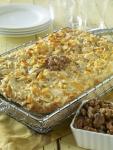 From Cooking Jewish: 532 Great Recipes from the Rabinowitz Family (Workman) by Judy Bart Kancigor
Order on amazon
There’s no contest: this is the king of kugels. It is sinfully rich, yet lighter in texture than others we have tried.
Rita Miller was a kosher caterer in New Jersey who created this recipe about 35 years ago, after six months of experimentation, to try to make the best and most unusual dessert kugel possible. Since then it was her carefully guarded secret. The first time she gave out the recipe was to her son, David, and his new bride, my cousin Vicki, so they could make it for their first Yom Kippur breakfast in San Francisco. When I begged her to let me put it in my cookbook, she relented and decided it was time to share it with the world. Please bear in mind, she says, that this recipe was created long before cholesterol became a household watchword!
Slice the wider pear and peach slices in half for a more elegant presentation. And if sliced pears are unavailable, buy pear halves and slice them yourself.
Adding Toffee Walnuts was my brother Gary's idea. Try them with this or any other kugel.
Israeli Carrot Salad
from "The Foods of Israel Today" by Joan Nathan
as seen in The Orange County Register, 9-14-01
2 cloves garlic, peeled
8 sprigs (1/2 bunch) fresh parsley, stems removed
1 pound carrots, peeled, cut into 1- to 2-inch lengths
2 tablespoons lemon juice
2 tablespoons orange juice
4 tablespoons extra-virgin olive oil
1/2 teaspoon salt
Several grinds of pepper
Cook's note: You can add orange slices and/or radish slices to garnish this salad. Add grated or julienne celery root with the carrots in winter.
- Place garlic and parsley in food processor fitted with steel blade; process until chopped.
- Add carrots, lemon juice, orange juice, oil, salt and pepper.
- Pulse until carrots are well-chopped but not puréed.
- Adjust seasonings and serve.
Yield: 6 servings
